
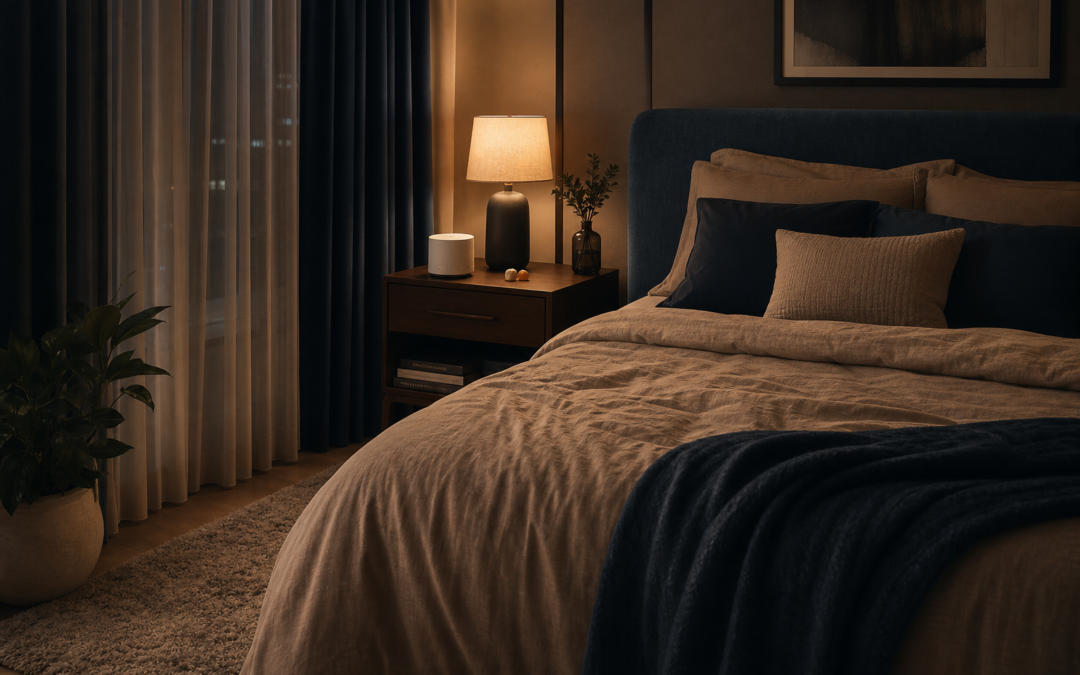
Noise is not just annoying at night. Sudden sound changes can pull your brain into alert mode, even when you barely remember waking up. This guide focuses on practical bedroom fixes: reduce sound peaks, soften the room, use masking carefully, and know when snoring or severe sleep loss deserves medical help.
The fastest wins are usually simple, physical changes.
- Reduce sound leaks first: close windows fully, seal the door gap, and move the bed away from the loudest wall if possible.
- Mask unpredictable noise: use a fan, air purifier, pink noise, brown noise, or white noise at a low, steady volume.
- Protect comfort: test earplugs only if they fit well and do not cause ear pain, pressure, or irritation.
- Do not ignore medical signals: loud snoring with gasping, choking, breathing pauses, morning headaches, or severe daytime sleepiness deserves evaluation.
A noisy bedroom can make good sleep feel impossible, especially when the sound is unpredictable: traffic bursts, hallway doors, upstairs footsteps, barking dogs, late-night music, or a partner who snores. The goal is not always perfect silence. For many people, the faster win is to reduce sudden sound changes, create a steadier background, and make the bedroom less reactive to noise.
If noise is causing severe sleep loss, safety issues, or major daytime sleepiness, it is worth speaking with a clinician. And if the “noise problem” is loud snoring with gasping, choking, breathing pauses, morning headaches, or significant daytime sleepiness, do not treat it as only a sound issue. Those signs can point to a sleep-related breathing concern that deserves medical evaluation.
Why noise disrupts sleep
Your brain keeps monitoring the environment while you sleep. That is useful for safety, but inconvenient when your neighbor discovers midnight furniture rearranging as a hobby.
Noise can wake you fully, but it can also cause brief arousals you barely remember. The next morning, you may not recall every sound, but you may feel lighter sleep, more awakenings, or less refreshed. Sudden changes are often more disruptive than a steady sound at the same volume, which is why a constant fan may feel easier to sleep through than random street noise.
The practical takeaway: focus on reducing peaks, masking unpredictable sound, and protecting comfort so your sleep setup is repeatable.
Start with the source: what kind of noise is it?
Before buying anything, identify the pattern. Different noise problems need different fixes.
| Noise source | What usually helps first | Best support move |
|---|---|---|
| Traffic, sirens, street noise | Latch windows, layer curtains, and move the bed away from the street-facing wall. | Add steady sound masking so sudden peaks stand out less. |
| Apartment or neighbor noise | Seal door gaps, move the bed off the shared wall, and add soft surfaces. | Use furniture, rugs, and a fan/air purifier to reduce sharpness and echoes. |
| Partner snoring | Look for medical warning signs before treating it as only a noise problem. | Use earplugs or masking temporarily while the underlying issue is addressed. |
Traffic, sirens, and street noise
Street noise is often low-frequency and inconsistent. A closed window helps, but sound can still travel through glass, thin walls, vents, and gaps.
Good first steps:
- Close and latch windows fully.
- Use thick curtains or layered window coverings.
- Move the bed away from the street-facing wall if the room allows.
- Add soft materials such as a rug, upholstered headboard, or fabric wall hanging.
- Use steady sound masking to reduce the contrast between quiet moments and sudden peaks.
Apartment or neighbor noise
Footsteps, voices, doors, plumbing, and shared-wall sound can be maddening because you cannot control the source.
Try this order:
- Seal obvious sound leaks around the door.
- Move the bed away from the shared wall.
- Place a bookshelf, wardrobe, or upholstered furniture on the noisy wall if safe and practical.
- Use a rug or soft flooring layer if sound reflects in your own room.
- Add white, pink, or brown noise at a comfortable volume.
If noise violates lease, building, or local rules, document the pattern calmly and use the proper building process. Do the boring admin first. It is less satisfying than yelling at the ceiling, but usually more effective.
Partner snoring
If your partner snores occasionally after alcohol, congestion, or sleeping on their back, positioning and nasal comfort may help. But frequent loud snoring is different.
Encourage medical evaluation if snoring is paired with:
- Gasping, choking, or breathing pauses.
- Severe daytime sleepiness.
- Morning headaches.
- High blood pressure or heart rhythm concerns.
- Waking up short of breath.
For simple noise reduction while the underlying issue is being addressed, consider separate blankets, a slightly different sleep position, earplugs, or sound masking. But do not use gadgets or bedroom hacks as a substitute for care when symptoms suggest a possible breathing disorder.
Fix the room before you blame yourself
A noisy room is not a character flaw. Start with physical changes that reduce sound reflection and sound leaks.
Start with changes that reduce leaks and echoes.
Use a draft stopper, sweep, or rolled towel.
Close, latch, and layer with heavier curtains.
Add rugs, fabric, shelves, or upholstered surfaces.
Move your head farther from shared, street-facing, elevator, or plumbing walls.
Seal gaps around the door
Hallway noise often enters through the gap under the bedroom door. A draft stopper, door sweep, or rolled towel can reduce the amount of sound and light entering the room. This is not full soundproofing, but it can make the room feel less exposed.
If you rent, choose temporary options that do not damage the door.
Add soft surfaces
Hard rooms echo. Soft materials absorb some reflected sound and make the room feel calmer.
Useful options include:
- Rugs or carpet runners.
- Fabric curtains.
- A padded headboard.
- Extra throw blanket over a chair.
- Canvas or fabric wall decor.
- Bookshelves or storage on shared walls.
These changes will not stop a loud subwoofer next door. They can, however, reduce the sharpness of smaller noises.
Move the bed if you can
A few feet can matter. If your headboard is against a shared wall, street-facing wall, elevator wall, or plumbing wall, try moving the bed. Even turning the bed so your head is farther from the source can reduce perceived noise.
If the room is small, test the change for three nights before rearranging everything permanently. Data beats dramatic furniture choreography.
Use sound masking carefully
Sound masking means adding a steady, comfortable sound so unpredictable noises stand out less. The goal is not to blast noise over noise. It is to create a stable sound floor.
| Option | What it feels like | Best use |
|---|---|---|
| White noise | Brighter, more static-like. | Masking sharp environmental changes when the sound does not feel harsh. |
| Pink noise | Softer and more balanced. | A gentler all-night sound floor for many sleepers. |
| Brown noise | Deeper and lower. | People who dislike high-frequency hiss. |
| Fan or air purifier | Natural steady hum. | Combining comfort, airflow, filtration, and masking. |
White, pink, or brown noise
White noise has a sharper “static” quality. Pink noise is often softer and balanced. Brown noise sounds deeper and lower. None is universally best. The right choice is the one that feels calming at a low volume and does not annoy you after 20 minutes.
Try this simple test:
- Set the sound lower than you think you need.
- Place the device across the room, not directly beside your ear.
- Use the same sound for three nights.
- If it feels harsh, switch to pink or brown noise.
- If it becomes distracting, try a fan, air purifier, rain sound, or no sound.
For more detail, see Fast Sleep Fix’s guide to white noise vs brown noise vs pink noise for sleep.
Fan or air purifier
A fan or air purifier can provide gentle background sound while also improving comfort. This works best when the device creates a consistent hum rather than rattling, pulsing, or clicking.
Keep airflow comfortable. A fan that dries your throat or makes you too cold can trade one sleep problem for another.
Volume safety
Keep any masking sound at a comfortable level. Louder is not automatically better, especially if the device is close to your head or runs all night. If you have hearing concerns, tinnitus, ear pain, or sensitivity to sound, ask a clinician or hearing professional before using nightly sound at higher volumes.
Earplugs can help, but fit matters
Earplugs are one of the simplest tools for sleeping with noise, but they are not all equally comfortable.
Foam earplugs
Foam earplugs can block a lot of sound when inserted correctly. The downside is that some people find them uncomfortable, especially side sleepers, and poor insertion reduces their effect.
Basic use:
- Roll the foam plug into a narrow cylinder.
- Gently insert it into the ear canal.
- Hold it in place briefly while it expands.
- Stop if it causes pain or pressure.
Silicone or moldable earplugs
Moldable silicone plugs sit at the ear opening rather than deep in the canal. Some side sleepers find them more comfortable. They may not block sound the same way foam plugs do, but comfort matters if you need to sleep with them regularly.
Reusable sleep earplugs
Reusable earplugs designed for sleep can be easier to handle and may feel more consistent. Look for soft materials, a low-profile shape for side sleeping, and clear cleaning instructions.
Avoid using earplugs if you have active ear pain, drainage, infection symptoms, or recent ear procedures unless a clinician says they are appropriate.
Related reading: Best Earplugs for Side Sleepers and Loop Earplugs vs Foam Earplugs for Sleep.
Build a noise-aware bedtime routine
Noise feels worse when your nervous system is already revved up. You cannot meditate a motorcycle into silence, but you can reduce the odds that every sound triggers a stress spiral.
Try a 20- to 30-minute wind-down routine:
- Dim lights.
- Set the room temperature.
- Start your sound masking if using it.
- Put the phone away or switch to a low-stimulation activity.
- Do a simple breathing exercise, stretch, or quiet reading.
- Use earplugs only when you are ready to sleep, if they are part of your setup.
The key is consistency. Your brain learns the sequence: same lights, same sound, same steps, same sleep cue.
For a deeper routine, see How to Create a Wind-Down Routine for Better Sleep.
What if you wake up from noise at 3 AM?
If a sound wakes you, avoid turning the moment into a full investigation unless safety requires it. Checking the clock, opening apps, or rehearsing tomorrow’s complaint email can train your brain to become more alert.
Try this instead:
- Keep lights low or off.
- Do not check the time if you can avoid it.
- Restart your steady background sound if it stopped.
- Use a calm phrase such as “I can rest even if the room is imperfect.”
- If you are awake for a while and frustrated, get out of bed briefly and do something quiet in dim light until sleepy.
If this pattern happens often, read Why Do I Wake Up at 3 AM Every Night? for more middle-of-the-night troubleshooting.
A simple three-night noisy-bedroom test
Use this mini-plan before deciding that nothing works.
Night 1: reduce obvious sound leaks
Close windows, seal the door gap, move noisy electronics away from the bed, and add one soft surface if the room is echoey.
Night 2: add steady sound masking
Try pink noise, brown noise, white noise, a fan, or an air purifier at a low, steady volume. Keep the device away from your head.
Night 3: test ear protection
If safe and comfortable for you, try sleep-friendly earplugs. If side sleeping makes them uncomfortable, test a softer or lower-profile style.
After three nights, note:
- Did you wake less often?
- Was falling asleep easier?
- Did you feel more rested?
- Did any fix create a new problem, such as ear discomfort or dry air?
Keep what helps. Drop what irritates you. Sleep systems are allowed to be practical, not heroic.
When to get help
Consider speaking with a clinician if noise-related sleep disruption leads to persistent insomnia, severe daytime sleepiness, drowsy driving risk, worsening anxiety, or trouble functioning during the day.
Seek medical evaluation for snoring if there are breathing pauses, gasping, choking, morning headaches, high blood pressure, or significant daytime sleepiness. Those symptoms need more than earplugs and optimism.
If your sleep environment is unsafe, if noise is tied to harassment or domestic conflict, or if you cannot safely rest at home, prioritize immediate safety and local support resources.
Bottom line
To sleep better in a noisy bedroom, do not chase perfect silence first. Reduce sound leaks, soften the room, move the bed away from the source, add gentle sound masking, and test comfortable ear protection if appropriate. If snoring, breathing symptoms, pain, or severe daytime impairment are part of the picture, bring in a clinician instead of trying to solve everything with bedroom hacks.
Small changes can make the room less reactive. That is usually the first win.
Sources
- World Health Organization Regional Office for Europe: environmental noise and night-noise guideline summaries.
- American Academy of Sleep Medicine / Sleep Education: guidance on white noise and sound machines for sleep.
- National Heart, Lung, and Blood Institute: sleep deprivation and sleep deficiency resources.
- Basner M, McGuire S. WHO environmental noise guidelines and sleep disturbance research summaries.
Disclosure and health note
Fast Sleep Fix may earn a commission if we add affiliate links to this article in the future. This article currently contains no affiliate links. The information here is for general education only and is not medical advice. If you have persistent insomnia, loud snoring with breathing pauses, severe daytime sleepiness, drowsy driving, ear pain, hearing concerns, or any safety concern, consider speaking with a qualified clinician.