Last updated: February 2026
Blue light blocking glasses have exploded in popularity as a sleep aid. But there’s a lot of marketing hype mixed in with actual science. This guide breaks down how these glasses work, compares amber versus clear lenses, and looks at lens quality, comfort, light blocking effectiveness, and whether they actually help you sleep better.
How Blue Light Blocking Glasses Work
These glasses have lenses that filter blue light (460-500 nanometers) by either absorbing it or reflecting it away. The amount of filtering depends on lens quality and the coating used.
Effectiveness varies wildly: budget glasses filter 10-30% of blue light, mid-range filter 30-50%, premium filter 50-90%. This matters because small differences in filtering translate to different effects on melatonin suppression.
Amber Lenses vs Clear Lenses: The Key Difference
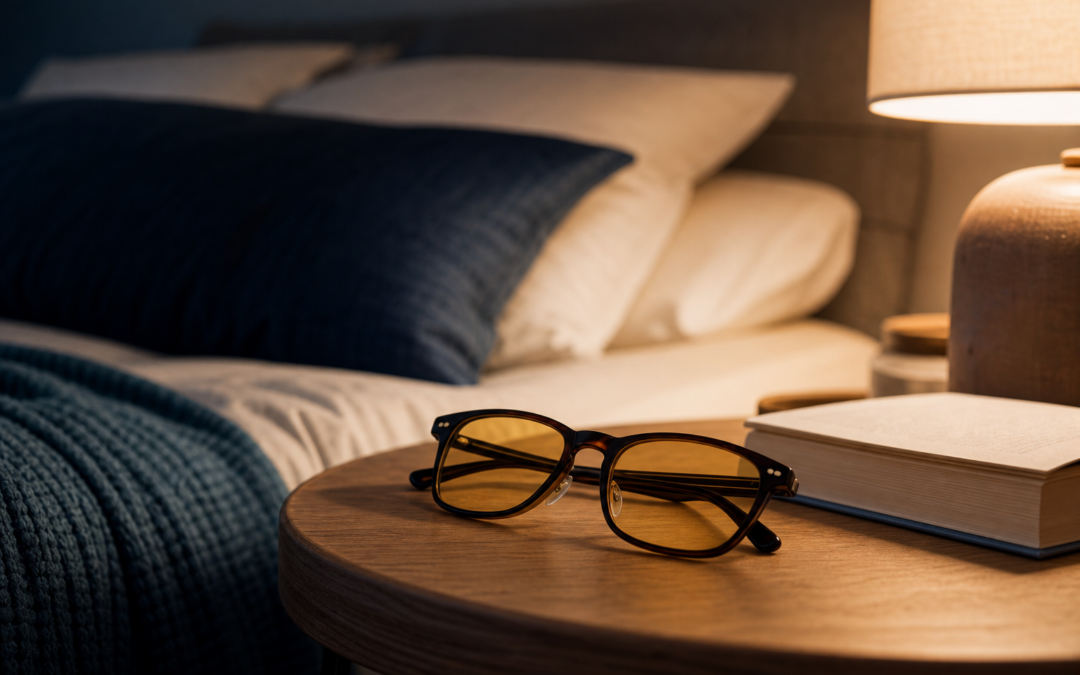
Amber/Yellow lenses: Filter more blue light (60-90%) by blocking shorter wavelengths. They tint your vision orange/yellow, which takes adjustment. More effective at blocking blue light, but cosmetically more noticeable.
Clear lenses: Filter less blue light (20-40%) through anti-reflective coatings or special dyes. They look like regular glasses and are socially acceptable to wear anywhere. Less effective but more comfortable to use consistently.
The trade-off: Amber lenses work better for blocking blue light but you have to be willing to wear orange-tinted glasses. Clear lenses don’t work as well but you’ll actually wear them.
Key takeaway: For consistent evening use (hours before bed), amber lenses are better. For all-day wear or social settings, clear lenses are more practical despite lower effectiveness.
Spectrum Differences: Daytime vs Nighttime Use
During the day: Blue light is beneficial. It helps you stay alert and reinforces circadian rhythm. You shouldn’t block blue light during daylight hours.
In the evening (4pm-bedtime): Blue light suppresses melatonin. Blocking it helps sleep. This is when blue light glasses are useful.
Recommendation: Use clear blue light glasses during the afternoon if you must wear something (minimal disruption to blue light sensitivity). Switch to amber glasses starting 2-3 hours before bed for maximum melatonin protection.
Best Amber Lens Glasses: BonCharge
Design: Fashionable frames available in multiple styles. The lenses are a warm amber color.
Blue light blocking: Manufacturers typically advertise amber lenses like these as blocking a high percentage of blue light — the exact figure varies by brand and lens tint, and is usually disclosed on the product page. As a category, amber lenses block meaningfully more blue light than clear lenses, and are marketed as supporting evening melatonin production.
Clarity: Slight tint to vision (you see the world in warm tones) but clear enough for reading or using a computer.
Comfort: Lightweight, minimal pressure on nose. Reviewers commonly report comfortable wear for 3+ hours.
Prescription options: Available in non-prescription frames or as clip-ons for existing glasses. Some prescription options available.
Price: Mid-priced compared to other amber lens options.
Why it’s best: Combines effectiveness, style, comfort, and a reasonable price point. You can actually wear these socially if desired.
Downsides: Amber tint takes 5-10 minutes to adjust to. Some people find the color tint disorienting initially.
Budget Amber Lenses: Generic Amazon amber glasses (budget-friendly)
A specific pick worth naming: the livho Blue Light Blocking Glasses — Amazon’s Choice and the #1 best-seller in this category, with 119,000+ ratings at 4.3 stars. It’s sold in both an amber-tinted (“Night Vision”) lens and a clear lens under the same listing, so it covers either use case in this article without buying two different products.
Check Price on Amazon →
Affiliate link — as an Amazon Associate we earn from qualifying purchases.
Quality: Varies widely across budget options.
Blue light blocking: Generally lower than premium amber options. Filtering percentage varies by batch and manufacturer, so check the listed spec before buying if this matters to you.
Comfort: Hit or miss. Some had poorly distributed weight, caused nose pressure after 1-2 hours.
Durability: Lower quality coatings. Lenses scratched more easily and anti-reflective coating degraded after 3-4 months.
Verdict: If you’re testing the concept, budget amber glasses are a low-risk way to try. If you like them, upgrade to better quality. Many people buy budget glasses and don’t use them consistently because they’re uncomfortable or don’t feel like a “real” product.
Best Clear Lens Glasses: Warby Parker Home Try-On (premium-priced)
Design: Regular-looking prescription or non-prescription glasses with blue light filtering coating.
Blue light blocking: More modest than amber lenses as a category, since clear coatings filter less by design — but you’ll actually wear them.
Clarity: Crystal clear. No tint. People won’t notice you’re wearing blue light glasses.
Comfort: Excellent. Warby Parker’s frames are well-balanced and comfortable for extended wear.
Prescription options: Full prescription available (big advantage over non-prescription).
Price: Typically costs more than off-the-shelf options, especially with prescription lenses added.
Downsides: Less effective than amber lenses as a category. You need to wear them consistently for benefit, and some users say the effect is subtle.
Why it’s good: If you already need glasses, blue light filtering is a no-brainer addition. The form factor makes consistent use likely.
Side Leakage: The Real Problem With Most Glasses
A common issue with these glasses: light enters from the sides, bypassing the lens filter entirely. This particularly affects:
Reading position: Eyes angled slightly upward (over the top of lens edges). Light leaks around the sides.
Side sleeping: Face pressed into pillow (light leaks from ear-side edges).
How much leaks? Side leakage is a known limitation of wraparound-style filtering — real-world effectiveness is generally lower than the lens’s rated blocking percentage suggests.
Solutions: Wear glasses that fit higher and closer to your eyes, or accept that they’re not 100% effective. Premium brands like BonCharge fit closer, reducing leakage.
Fit and Comfort for Extended Evening Wear
If you’re going to wear blue light glasses 3+ hours before bed, fit matters:
Weight: Should be under 30 grams (barely noticeable). Frame weight across the category commonly ranges from roughly 20-45 grams. Anything over 35 grams tends to cause nose pressure after 1-2 hours.
Bridge fit: Should distribute weight evenly on both nose sides. Poorly-fitting bridges cause red marks and discomfort.
Temple pressure: Temples shouldn’t pinch your ears. You should be able to wear them for 3+ hours without discomfort.
Frame width: Should match your face width. Too narrow = pressure on temples. Too wide = slips down.
Best fit brands: BonCharge, Warby Parker, Felix Gray all have good ergonomic design.
How to Use Blue Light Glasses Effectively
Start time: 2-3 hours before bed (this is when blue light suppresses melatonin most).
Duration: Continuous wear until bedtime (consistency matters). You need 2+ hours of wearing for effect.
Effectiveness timeline: Night 1-2: Minimal noticed effect. Night 3-5: Some users notice earlier sleep onset. Week 2+: Most consistent users report 15-30 minute earlier sleep onset.
Don’t wear: During the day or morning. This suppresses circadian rhythm and actually makes blue light glasses less effective in the evening.
Expected benefit: 15-45 minutes earlier sleep onset (depends on individual sensitivity). Not a cure for insomnia, but a useful circadian rhythm support tool.
Alternatives to Blue Light Glasses
Before buying glasses, consider these simpler alternatives:
Smartphone blue light filter (free): Enable “Night Shift” (iPhone) or “Night Light” (Android) 2-3 hours before bed. Reduces blue light 20-40%. Zero cost.
Reduce screen brightness (free): Dim your phone to 20-30% brightness in the evening. Reduces light intensity 70-80%. Research shows brightness matters more than color filtering.
Warm bulbs in bedroom (low cost): Use 2700K warm white bulbs instead of 4000K+ daylight bulbs in evening. Eliminates evening blue light from room lighting (often ignored but significant).
Screen curfew (free): Stop using screens 30-60 minutes before bed. Most effective option but hardest to implement.
Blue light glasses (mid-cost): Best option if you can’t reduce screen time and want a wearable solution.
Order of effectiveness: Screen curfew > dimming > warm room light > blue light glasses > software filters. Many people combine multiple (like warm bulbs + blue light glasses + dimming).
Prescription vs Non-Prescription
If you wear glasses already: Add blue light filtering to your prescription. This is the most seamless approach. Cost: typically an added fee on top of your regular prescription lens cost.
If you don’t need vision correction: Non-prescription blue light glasses are still effective. Lenses are just tinted with no corrective power.
Prescription blue light glasses: Warby Parker, BonCharge, and others offer prescription options. Cost ranges from budget to mid-priced depending on frame and prescription complexity.
Recommendation: If you already wear glasses, just add blue light filtering to your existing pair. If you don’t wear glasses, non-prescription blue light glasses are convenient enough that you’ll use them.
Top Picks Summary
Best overall: BonCharge amber lenses (mid-priced). Best blocking, wearable, good price.
Best for clear vision: Warby Parker with blue light filter (premium-priced). If you can’t wear tinted, these are the clearest while still effective.
Best budget test: Amazon generic amber (budget-friendly). Inexpensive way to test if blue light glasses work for you before investing.
Best if you already wear glasses: Add blue light coating to your existing prescription frames (budget to mid-priced at most opticians).
Science Summary: Do They Actually Work
Yes, but with caveats. Peer-reviewed studies show blue light glasses delay melatonin onset by 15-45 minutes when worn 2-3 hours before bed. This translates to noticeable earlier sleep onset for most people.
However, they’re not a substitute for good sleep habits. They work best when combined with consistent bedtime, dim room lighting, and a regular sleep schedule.
Who benefits most: Evening shift workers, people who must use screens before bed, individuals with light-sensitive circadian rhythm.
Who might not see benefit: People who already have good evening screen habits, those with severe insomnia (need medical intervention), people who fall asleep instantly regardless.
Related Content on Sleep and Light
For deeper understanding of how light affects sleep, read our guide on blue light and sleep science. For tools that use light to improve sleep, see our sunrise alarm clock recommendations.
Bottom Line
Blue light blocking glasses work best when combined with reduced screen brightness and warm room lighting. BonCharge amber lenses are a top pick for effectiveness and wearability. If you can’t tolerate the tint, clear lenses or smartphone filters are valid alternatives. Buy a pair and commit to wearing them 2-3 hours before bed for at least a week—you’ll know within that time if they help your sleep.
Related Reading
- Blue Light and Sleep: Timing, Brightness, and Distance
- Best Sunrise Alarm Clocks
- Best Sleep Masks for Complete Darkness
Disclosure
Some links on this page are Amazon Associate affiliate links — Fast Sleep Fix earns from qualifying purchases made through them, at no extra cost to you. We only link to specific products when we can name a real reason to recommend that exact item.