Last updated: February 2026
Sleep earbuds are different from regular earbuds. They’re designed to stay in your ears during sleep and play white noise or meditation all night without falling out or digging into your pillow. Research suggests that continuous background sound can improve sleep onset and duration for some people. But most regular earbuds fail for sleep because they’re too bulky, fall out, or have batteries that die mid-night. Here’s what to know about choosing sleep earbuds that actually hold up overnight.
What Makes Sleep Earbuds Different
Sleep earbuds have several key features that separate them from regular earbuds: ultra-low-profile design (no protruding tips), secure fit for side sleepers, long battery life (8+ hours), and features like auto-pause when you wake up. Most also come with white noise, meditation, or sleep story content pre-loaded or available through apps.
Low-Profile Design Is Everything
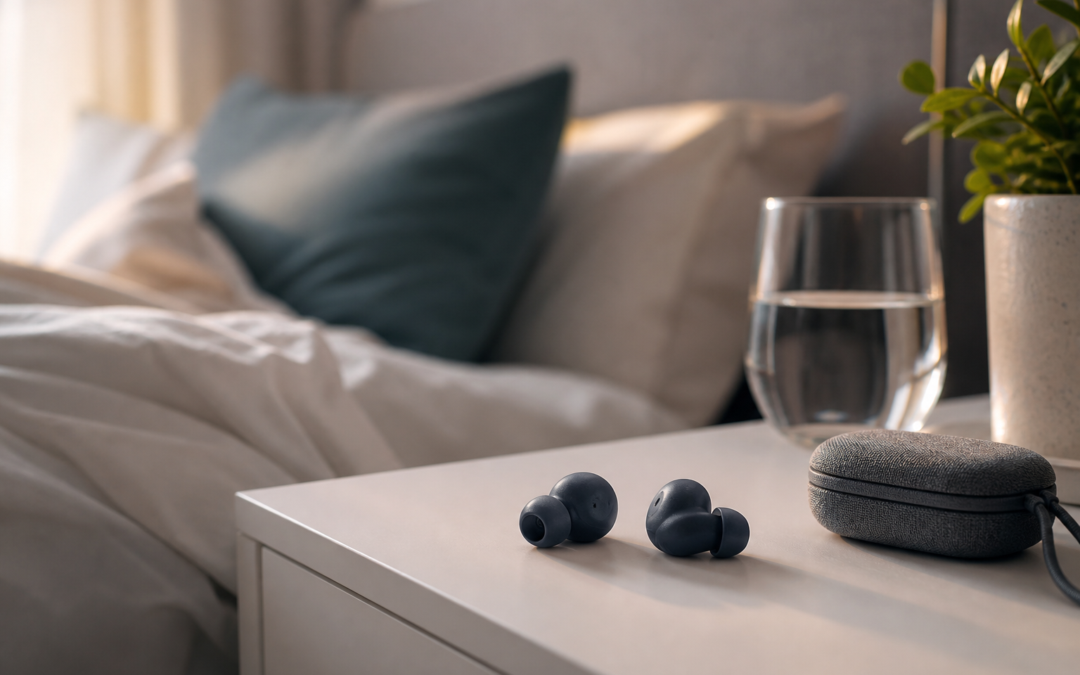
The biggest issue with regular earbuds during sleep is that they stick out from your ear and dig into your pillow. Sleep earbuds have flat, inward-curving designs that don’t protrude, which is generally what makes the difference between an earbud you can sleep on and one that becomes uncomfortable within the first half hour.
Manufacturers of dedicated sleep earbuds design specifically around this problem — a flatter profile that sits closer to the ear is the main reason side sleepers commonly report being able to wear them for hours without noticing pressure, compared to the discomfort many people describe with regular earbuds.
If you’ve tried regular earbuds for sleep and they hurt, it’s not you—it’s the earbud design.
Best Sleep Earbud: Bose Sleepbuds II (Discontinued — See Alternatives)
Design: Ultra-flat, custom-moldable to your ear shape. Available in small, medium, and large.
Battery life: Up to 16 hours per charge, among the longest in the category — enough to get through a full night without the batteries dying on you.
Comfort: Commonly described by users and reviewers as among the most comfortable sleep earbuds available, thanks to the contoured, custom-fit design that minimizes ear pressure.
Sound library: Pre-loaded with 100+ sounds: white noise, rainfall, thunderstorm, ocean, nature ambience, meditation tracks. No internet required (offline works).
Controls: Touch-free. Volume controlled through the app only, so you won’t accidentally trigger noise by moving in your sleep.
Downsides: Premium price tier, proprietary charging case, non-replaceable batteries (manufacturer-estimated lifespan of a couple of years).
Bottom line: If budget allows, these are widely considered the gold standard for sleep earbuds.
Budget Alternative: Soundcore Sleep A10
Design: Flat, ear-fitting design. Slightly less contoured than Bose, but still comfortable for most people.
Battery life: Around 10 hours on a single charge — enough for one night, with less margin than Bose.
Comfort: Generally reported as comfortable for side sleeping, with minimal pressure, though not quite as imperceptible as the Bose design.
Sound library: App-based with white noise, rain sounds, meditation. Requires Bluetooth connection to phone (one drawback).
Controls: Touch-based, which carries some risk of accidental triggering during sleep — a common complaint with touch-control earbuds generally — but volume adjustment is possible without removing them from your ears.
Price: Mid-range — meaningfully more affordable than premium options like the Bose Sleepbuds.
Bottom line: Often recommended as the best value if you don’t mind the shorter battery life.
Best for All-Night Use: Sony LinkBuds Fit (WF-L900)
Design: Compact, but slightly more bulbous than dedicated sleep earbuds. Works for side sleepers who don’t toss excessively.
Battery life: About 12 hours per charge, with the case adding significant additional playtime.
Comfort: Not purpose-built for sleep, so comfort tends to be good but not on par with dedicated sleep earbuds.
Sound library: Access to Sony’s music streaming (good for a fall-asleep routine, but not ideal if you specifically want pure sleep sounds).
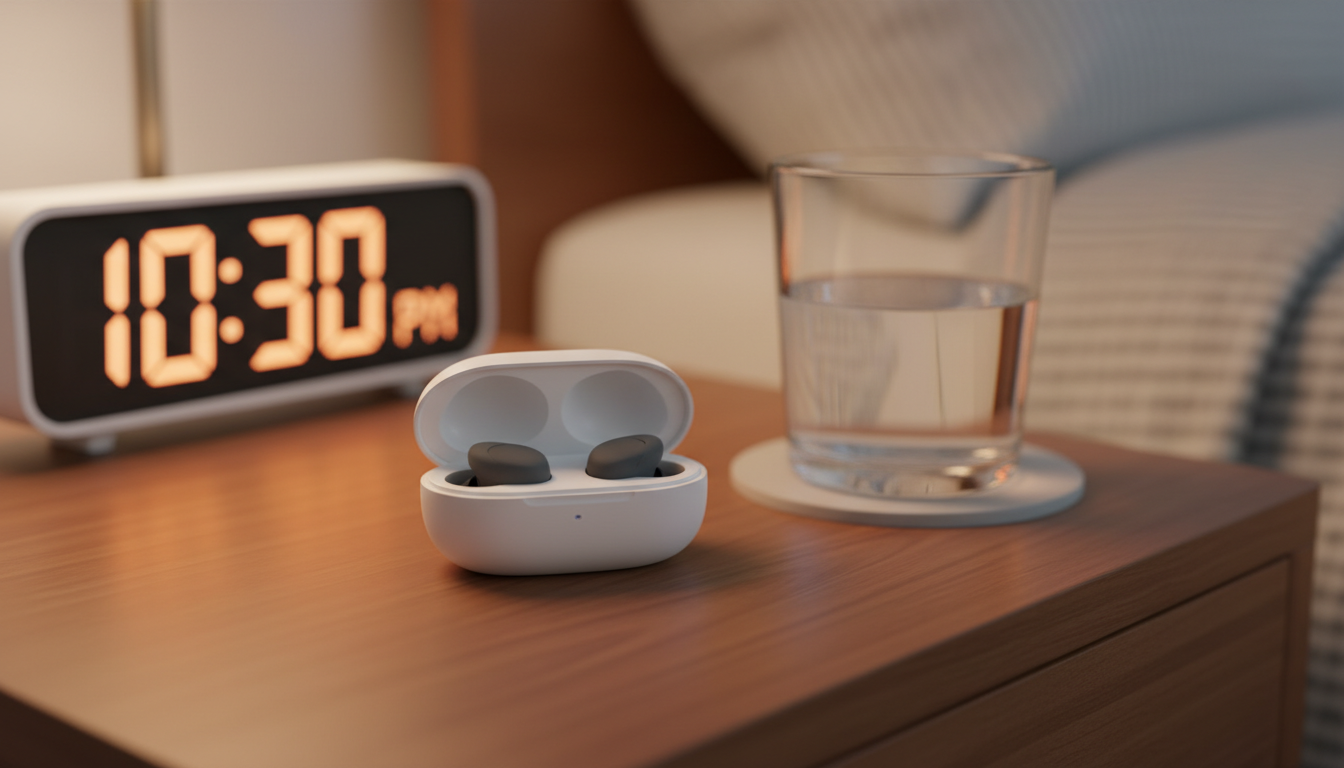
Controls: Touch-based with good responsiveness.
Why it’s included: If you want earbuds that work for regular listening AND sleep, this is a solid hybrid option.
Critical: Battery Safety During Sleep
All earbuds use lithium batteries (the CPSC provides battery safety guidance), which are safe but require precautions during sleep:
Fire risk: Very rare in properly manufactured lithium batteries, but possible if a battery is defective or damaged. Always use manufacturer-approved chargers.
Heating concern: Batteries can heat slightly during charging, which is normal. Manufacturer guidance is consistent on this point: never sleep while earbuds are charging.
Best practice: Charge earbuds during the day, use at night. Never charge them while wearing or while in bed.
Controls: Touch vs Physical Buttons
Touch controls: Modern sleep earbuds use touch. Issue: you might accidentally trigger controls while sleeping (rolling over, pillow pressure) — a commonly reported annoyance with touch-control models.
Physical buttons: Older designs sometimes had tiny buttons. Issue: harder to find in the dark if you need to adjust volume.
Best design: App-only control, like Bose’s SleepBuds, avoids accidental triggering entirely.
Workaround for touch models: Set the app to disable touch controls during sleep hours. Most modern sleep earbuds have this setting.
White Noise Playback: All-Night Without Looping
A key feature of sleep earbuds is that they can play white noise or ambient sounds for many hours without noticeable loops or interruptions. Regular earbuds with small storage often can’t do this—they may loop every 10-30 seconds, which can pull you out of deep sleep.
SleepBuds by Bose: 100 pre-loaded sounds, manufacturer states no looping, up to 16 hours continuous play.
Soundcore Sleep A10: App-based streaming, so looping depends on your streaming service, but the built-in sounds are pre-loaded and designed not to loop noticeably.
Key spec to check: Storage capacity for dedicated sleep earbuds vs. relying on streaming (which fails if Bluetooth drops).
Fall-Asleep Mode vs. All-Night Use
Sleep earbuds offer different modes:
Fall-asleep mode: Plays audio, then gradually reduces volume and fades to silence as you drift off. Useful for people who need audio to sleep but don’t want it all night.
All-night mode: Continuous audio for many hours at a consistent (or gradually adjusting) volume. For people who need consistent background sound to sleep.
Smart detection: Some earbuds use accelerometers to detect when you’ve fallen asleep and auto-pause audio. Useful for battery preservation.
Fall-asleep mode tends to work well for most people. All-night mode is worth prioritizing if you wake easily to silence. Smart detection is a nice bonus but not a dealbreaker either way.
Fit for Restless Sleepers
If you move around a lot, earbuds might fall out — and how well a given model stays put varies a lot by design:
SleepBuds by Bose: Widely regarded as offering the most secure fit for restless sleepers, largely due to the custom-moldable design.
Soundcore Sleep A10: Generally stays in place well for side sleeping, though some users report occasional shifting overnight.
Sony WF-L900: Since it isn’t purpose-built for sleep, retention for very restless side sleepers tends to be more hit-or-miss.
If you’re a restless sleeper, custom-moldable designs like SleepBuds are generally the safer bet. For lighter sleepers, other options work fine.
Buyer Checklist for Sleep Earbuds
- Flat, low-profile design (no protrusions)
- 8+ hour battery life minimum
- Pre-loaded sleep sounds (not dependent on streaming)
- Secure fit for side sleeping
- Control system that won’t trigger during sleep (app-based is ideal)
- Hypoallergenic materials (some silicone can irritate ears after hours of wear)
- Customizable volume and audio options
- Warranty covering battery degradation
Bottom Line
Sleep earbuds are a game-changer if you use white noise, meditation, or sleep stories to fall asleep and need to wear earbuds all night. SleepBuds by Bose are the best option if budget allows. Soundcore Sleep A10 is a strong budget option. If you already have regular earbuds and want to try them for sleep, understand they’re not designed for sleep comfort and many people find they cause pressure discomfort within an hour or two.
Related Reading
- Best White Noise Machines: Travel and Baby-Safe Options
- Best Earplugs for Sleeping: Foam vs Silicone vs Loop-Style
- Best Sleep Masks: Side Sleeper Picks and Light Blocking
Disclosure
Fast Sleep Fix may earn a commission if affiliate links are added to this article in the future. This version was published without active affiliate links.