Last updated: February 2026
White noise machines are simple devices, but they vary wildly in quality. Some loop every 10 seconds and sound like a robot. Others play genuinely continuous sound. Here’s what to know about loop consistency, volume range, portability, and noise-blocking effectiveness when choosing one.
Fan-Based vs Speaker-Based: The Core Difference
Fan-based machines: Use an actual fan motor to generate white noise. Examples: Marpac Dohm, Levoit LV-Uh.
Advantages: Continuous sound (no looping), mechanical reliability, low electromagnetic radiation (EMR), quiet operation of internal components.
Disadvantages: Slightly louder (fans are inherently noisy), less customizable sound, higher humidity in bedrooms (fans move air).
Speaker-based machines: Use digital sound files played through speakers. Examples: myNoise.net app, LectroFan.
Advantages: Highly customizable sounds, smaller footprint, low heat generation, no humidity effects.
Disadvantages: Loop artifacts (sound might repeat), app dependency (if it crashes), EMR exposure (though minimal).
Verdict: Fan-based for purists, speaker-based for customization seekers.
The Loop Problem: Why Some Machines Sound Fake
This is the #1 complaint about white noise machines. Some machines play a short clip of sound, then repeat it. Consciously, you don’t always notice the repeat. Subconsciously, the brain can pick up on the pattern, which may keep you slightly more alert.
Loop detection is the key differentiator between machines, and it largely comes down to how the sound is generated:
Marpac Dohm: Truly continuous (fan-generated, so there’s nothing to loop).
LectroFan: Uses long-form (multi-hour) sound files, so any looping is rarely noticeable — among the closest to continuous for a speaker-based machine.
Budget speaker machines: Often use much shorter loops (as brief as 30-60 seconds), which tend to be noticeable if you listen closely.
Recommendation: If loop is a concern, go with fan-based. If you don’t mind subtle loops, speaker-based machines offer better customization.
Volume Range: The Sweet Spot
White noise needs to be loud enough to mask ambient sounds but not so loud that it’s jarring. A commonly cited target range is 50-65 dB (similar to background conversation). Too quiet and it won’t mask snoring or traffic. Too loud and it becomes disruptive rather than soothing.
Volume also degrades with distance and room placement, which is worth factoring in when choosing where to put the machine:
Marpac Dohm: Roughly 50-80 dB range depending on speed setting. Good for most situations, with an adjustable and intuitive dial.
LectroFan: Roughly 45-85 dB range. Wider range, useful for different room sizes, though the small buttons make volume adjustment slightly less intuitive.
Budget machines: Typically a narrower range (around 40-70 dB). Limited flexibility, and may not be loud enough for large rooms or for drowning out loud snoring.
Phone app (myNoise.net): Phone speaker volume generally caps output around 60 dB at full volume on most phones. Adequate for personal use, less so for shared bedrooms with loud snoring.
Portability: Travel Machines
If you travel frequently, portability matters more than raw sound quality. Here’s how these options tend to compare for travel — carry-on fit, setup time, battery life, and sound quality in unfamiliar rooms:
Best for travel: LectroFan Micro
Size: Smaller than a phone. Battery: 10+ hours. Setup: About 30 seconds (plug in, turn on). Sound: Speaker-based, long sound files that are practically continuous.
Price: Budget-tier. Great value for travelers.
Check LectroFan Micro2 Price on Amazon →
Affiliate link — as an Amazon Associate we earn from qualifying purchases.
Note: the Micro2’s Amazon listing has a small review base (around 40 ratings) compared to the Classic and Dohm — worth knowing since it’s a newer product, not necessarily a red flag on its own.
Best for car travel: Phone app (myNoise.net)
Fits in your pocket, free with ads (or a low-cost one-time fee for ad-free). Works anywhere you have power (USB charger). Downside: Depends on phone battery and signal (though offline mode works after initial load).
Best for home travel (hotel rooms): Marpac Dohm
Slightly larger than LectroFan Micro but more durable and continuous sound. Worth packing in a suitcase if you’re serious about white noise during travel.
Fan-Based Deep Dive: Marpac Dohm
Design: Oval, mechanical fan inside. Dual-speed options (low, high).
Sound quality: Genuine white noise with slight air circulation (not unpleasant).
Durability: Mechanical fan-based machines are widely reported to last a decade or more with essentially no maintenance — it’s common to hear from owners still using units well over ten years old.
Noise characteristics: Hum from the motor (imperceptible to most people, but if you have sensitive hearing, you might notice it).
Best for: People who want true continuous white noise and don’t mind the slight air circulation.
Downsides: Not customizable, slightly bulkier, minimal volume range on older models.
Check Yogasleep Dohm Classic Price on Amazon →
Affiliate link — as an Amazon Associate we earn from qualifying purchases.
Yogasleep is Marpac’s current brand name for the Dohm line — same product, updated branding. A newer Elite variant with a volume dial is also available on the same product page.
Variants: The newer Dohm Elite has a dial for volume control (better than older fixed models). Worth considering if you want the fan experience with more control.
Speaker-Based Deep Dive: LectroFan
Design: Digital device with speaker. Menu-based controls for sound selection.
Sound options: Around 10 different noise types (white, pink, brown), fan sounds, rain, thunderstorm, etc.
Customization: High. You can mix and match frequencies, adjust volume smoothly, select which sound plays.
Loop characteristics: Long-form (multi-hour) audio files minimize looping artifacts, making loops rarely noticeable even with close listening.
Power options: AC adapter (plug in) or batteries (4x AA for travel). Battery life: 10+ hours on AA batteries.
Best for: People who like variety and want to adjust sound based on mood or sleep needs.
Downsides: Slightly more complex setup, more buttons to navigate in the dark, slightly higher EMR (though still minimal).
Check LectroFan Classic Price on Amazon →
Affiliate link — as an Amazon Associate we earn from qualifying purchases.
White Noise vs Pink Noise vs Brown Noise: Which to Choose
White noise: Equal volume across all frequencies. Sounds like a hiss. Best for masking high-pitched sounds (traffic, conversation).
Pink noise: More bass-heavy, equal volume per octave. Sounds like soft rain. Better for masking snoring and mid-range sounds. Many people find it more pleasant than white noise.
Brown noise: Even more bass-heavy. Sounds like distant thunder or ocean waves. Best for deep sleepers who want immersive sound.
Recommendation: Try pink noise first. It’s more pleasant for many people and still masks most sounds. If that doesn’t work, experiment with white or brown.
Setup for Best Results
Placement: Position the machine roughly 5-7 feet from your bed. Too close (under 3 feet) makes sound too directional. Too far (10+ feet) loses effectiveness.
Height: Ear level or slightly below is generally ideal. Machines on high shelves or the floor sound different.
Angle: For fan-based machines, angle the outlet away from your face (generates slight airflow).
Volume: Start around 50-55 dB (similar to conversation volume) and adjust up or down based on what you need to mask.
Timing: Turn on the machine 5-10 minutes before bed so you’re acclimated when you try to sleep. Turning it on only after you’re already trying to fall asleep can feel jarring.
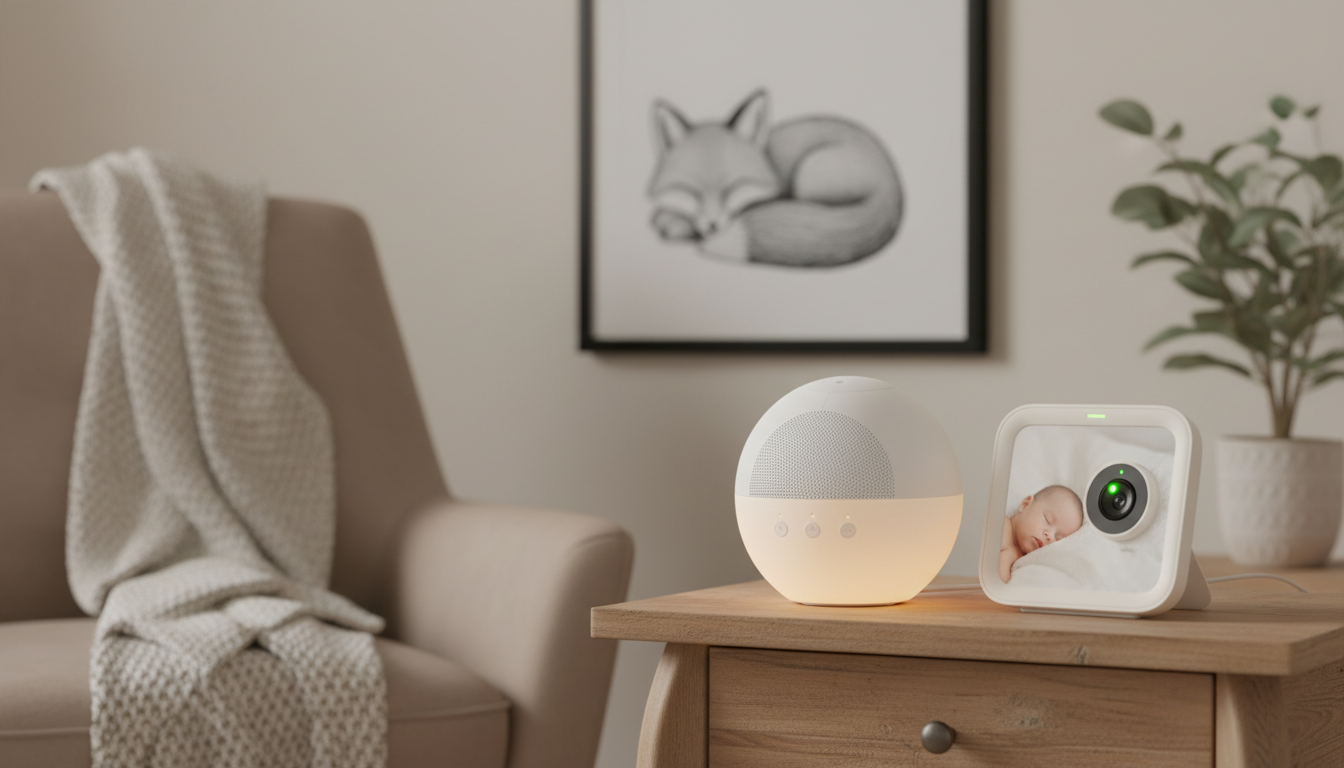
Baby-Safe Recommendations
If you have an infant, white noise safety is critical:
Maximum volume: Keep machines at 50-65 dB max. Anything louder can risk infant hearing. The American Academy of Pediatrics has studied sound machine levels near infants with prolonged exposure.
Placement: At least 3 feet away from the crib (not directly next to the baby’s head).
Safety certifications: Look for machines with UL or ETL certification (safety standard compliance).
Best for babies: LectroFan or the myNoise app (both allow precise volume control). Avoid extremely loud machines even if you also use them for yourself.
Research note: HealthyChildren.org (AAP) notes that some studies suggest prolonged loud white noise might affect infant speech development. Keep volume moderate and use only as needed for sleep.
Room Size Matters
Small room (10×10 or smaller): Any machine works. Even quiet ones (40-50 dB) are effective.
Medium room (10×15): Marpac Dohm or LectroFan at mid-volume.
Large room (15×20 or bigger): You’ll generally need 70+ dB output. Only the Dohm on high or LectroFan on maximum reliably delivers this. You might need two machines for very large spaces.
Bottom Line
For true continuous white noise with minimal fuss, the Marpac Dohm (especially the Dohm Elite) is a solid bet. For customization and travel portability, the LectroFan Micro is hard to beat. If you want to test before investing, the myNoise.net app is free to try. Give any machine 5-7 nights before deciding if it works for you—it can take a little time to adapt to continuous background noise.
Related Reading
- Best Budget White Noise Machines on Amazon (five picks under $40)
- Best Sleep Earbuds for Side Sleepers
- Best Sleep Masks and Light Blocking
- Best Sunrise Alarm Clocks
Disclosure
Disclosure: As an Amazon Associate, Fast Sleep Fix earns from qualifying purchases. The product recommendations above are based on the manufacturer’s published specifications and Amazon’s aggregate rating and review-volume data — not first-hand testing by our team.