
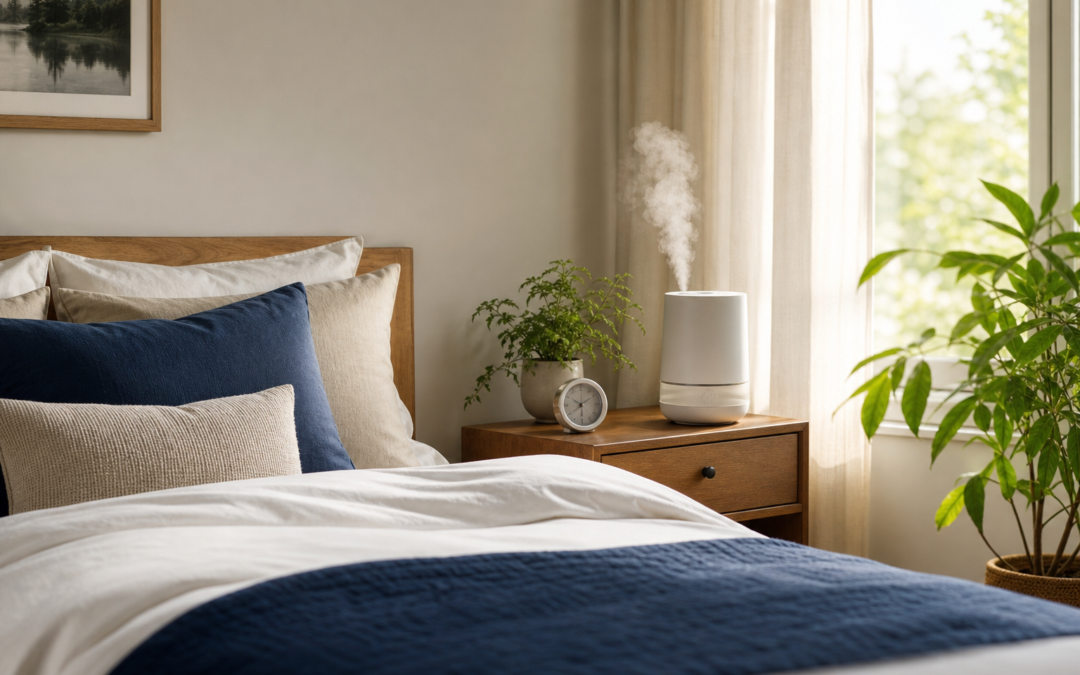
Bedroom air quality is easy to ignore because it is not as obvious as a loud neighbor, a hot room, or a bad pillow. But if your bedroom feels stale, dusty, smoky, musty, or hard to breathe in at night, it can become part of the sleep problem.
The goal is not to turn your bedroom into a laboratory. The goal is to make the room feel clean, comfortable, and breathable enough that your body can settle down. For many people, the best first steps are simple: improve ventilation when outdoor conditions are safe, reduce dust in the bed area, control humidity, avoid indoor smoke, and use filtration when it fits the room.
If you have persistent breathing symptoms, worsening allergies, chest tightness, loud snoring, witnessed breathing pauses, severe daytime sleepiness, or symptoms that feel unsafe, treat that as a medical question rather than a bedroom project. Talk with a qualified clinician.
Why bedroom air quality can matter for sleep
Sleep depends on more than bedtime willpower. The American Academy of Sleep Medicine describes sleep problems as sometimes coming from the body, the mind, or outside factors in the environment. Most sleep-environment advice focuses on light, noise, temperature, and routine, but air quality belongs in that same practical bucket.
A bedroom can look tidy and still have air-quality issues that affect comfort:
- Stale air from poor ventilation.
- Dust buildup around bedding, floors, curtains, and fans.
- Dampness or musty smells from excess humidity.
- Very dry air that irritates the nose or throat.
- Smoke, fragrances, cleaning products, or other indoor pollutants.
- Pollen or outdoor pollution coming in at the wrong time.
- Pet dander or dust mite allergens concentrated near the bed.
None of this means air quality is the only reason you are sleeping badly. It means the room is worth checking, especially if symptoms are worse in bed or better when you sleep somewhere else.
The quick answer: what to fix first
If your bedroom feels stuffy at night, start with this order:
- Ventilate safely. Open a window when outdoor air, noise, temperature, and security allow. If not, use a fan or building ventilation system in a way that moves air without overheating or adding noise.
- Control humidity. Many bedrooms feel best in a middle range. Avoid air that is extremely damp or painfully dry.
- Clean the sleep zone. Wash bedding, reduce dust near the bed, and clean fan blades, vents, and floors.
- Remove pollutant sources. Keep smoking, vaping, strong fragrances, and harsh cleaning odors out of the bedroom.
- Consider filtration. A properly sized air purifier may help reduce particles, especially when outdoor air is poor or allergies are a problem.
- Watch for medical red flags. Breathing pauses, gasping, chest symptoms, severe sleepiness, or persistent nighttime breathing trouble need clinician input.
That is the non-glamorous version. Annoyingly, non-glamorous is often what works.
Ventilation: the stale-room sleep fix people skip
Ventilation means replacing stale indoor air with fresher air. In a bedroom, poor ventilation can show up as a heavy or stuffy feeling, morning headaches, lingering odors, condensation, or a room that feels worse after the door has been closed all night.
Research on bedroom ventilation has found that lower carbon dioxide levels, used as a marker of better ventilation, were linked with better objectively measured sleep quality, fresher perceived air, less next-day sleepiness, and better concentration in small field studies. That does not mean every person needs a carbon dioxide monitor. It does suggest that fresh air is not just a comfort detail.
Easy ways to improve bedroom ventilation
Try one or two changes at a time:
- Open a window for part of the evening when outdoor air quality, temperature, pollen, noise, and safety are reasonable.
- Keep the bedroom door slightly open if the room gets stale with the door closed.
- Use a fan to move air across the room rather than blasting air directly at your face all night.
- Make sure vents are not blocked by furniture, curtains, or storage bins.
- Use bathroom and kitchen exhaust fans when showering or cooking so moisture and odors do not drift into sleeping areas.
- If your home has HVAC, replace filters on the schedule recommended for your system.
Do not open windows during wildfire smoke, heavy outdoor pollution, high pollen if you are sensitive, unsafe weather, or security concerns. Fresh air is useful. Bad outdoor air with a breeze is still bad air.
Dust, bedding, and the area around your head
Your face spends hours close to pillows, sheets, mattresses, blankets, and nearby surfaces. If the sleep zone is dusty, it can irritate the nose, throat, eyes, or skin for some people.
Mayo Clinic notes that reducing exposure is a first step for dust mite allergy, although dust mites cannot be completely removed from a home. Bedroom-focused steps often matter most because bedding is a major exposure area.
A simple bedroom dust-control routine
Start here before buying anything:
- Wash sheets and pillowcases regularly.
- Follow care labels for blankets, duvet covers, and washable mattress protectors.
- Vacuum floors and rugs, especially around and under the bed.
- Dust hard surfaces with a damp cloth so dust is captured instead of pushed into the air.
- Clean ceiling fan blades and portable fan grilles.
- Keep laundry piles, paper clutter, and under-bed storage from turning into dust traps.
- Replace or clean HVAC and purifier filters according to the product instructions.
If allergy symptoms are significant or persistent, ask a clinician or allergist what steps make sense. Depending on the situation, they may discuss testing, medication options, bedding encasements, humidity control, or other targeted changes.
Humidity: too damp and too dry can both be annoying
Bedroom air quality is tied closely to humidity. Air that is too damp can feel heavy and may encourage mold or dust mites. Air that is very dry can make the nose, throat, eyes, or skin feel irritated.
A practical comfort target for many bedrooms is roughly 30% to 50% relative humidity, but the right feel depends on climate, season, building, and health factors. If you already read our bedroom humidity guide, this is the same idea: aim for a comfortable middle, not a perfect gadget number.
Signs humidity may be part of the problem
Possible damp-room clues:
- Musty smell.
- Condensation on windows.
- Bedding that feels clammy.
- Visible mold or recurring mildew.
- Allergy-like symptoms that seem worse in that room.
Possible dry-room clues:
- Dry mouth or scratchy throat on waking.
- Dry eyes or irritated nose.
- Static electricity.
- Symptoms that are worse during winter heating season.
If you use a humidifier, keep it clean and follow the manufacturer’s instructions. A dirty humidifier can make the room less healthy, not more soothing. If dampness or mold keeps returning, address the moisture source rather than just masking the smell.
Air purifiers: helpful tool, not magic sleep dust
An air purifier may help reduce airborne particles in a bedroom, especially if you deal with dust, pollen, pet dander, wildfire smoke, or outdoor pollution. It is not a cure for insomnia, allergies, asthma, snoring, or sleep apnea. It is a room-comfort tool.
When comparing bedroom air purifiers, look for:
- A size rating that fits your bedroom.
- HEPA-type particle filtration or a clearly stated filtration standard.
- Noise levels you can tolerate at night.
- Filter replacement cost and availability.
- A display you can dim or turn off.
- No strong ozone-producing feature for routine bedroom use.
Run the purifier before bed if the fan noise bothers you, or use a low setting overnight if the sound is comfortable. Some people find the steady fan sound helpful; others find it distracting. Sleep is personal, because apparently even machines need a personality test now.
Sources of indoor pollution to keep out of the bedroom
The EPA emphasizes source control, ventilation, and filtration as major indoor-air strategies. In plain English: remove the thing causing the problem when you can, bring in cleaner air when conditions allow, and filter what remains when useful.
Bedroom source-control basics:
- Do not smoke or vape indoors.
- Avoid burning candles or incense near bedtime if smells linger or irritate you.
- Use low-odor cleaning products and let the room air out before sleep.
- Keep litter boxes, strong fragrances, paint, solvents, and stored chemicals out of sleeping areas.
- If you use a gas appliance, fireplace, space heater, or attached garage nearby, make sure carbon monoxide safety is handled correctly.
Carbon monoxide is not a sleep-hygiene inconvenience. It is a safety issue. Use working carbon monoxide alarms where recommended, and follow local safety guidance for fuel-burning appliances.
What about plants, sprays, and “detox” claims?
Bedroom plants can be pleasant, but they are not a substitute for ventilation, cleaning, moisture control, or filtration. A few houseplants will not outwork a damp room, indoor smoke, dusty bedding, or poor HVAC maintenance.
Be careful with products that promise to “detox” your room or guarantee better sleep through vague air claims. For sleep, the practical questions are simpler:
- Does the room smell clean without heavy fragrance?
- Can air move in and out safely?
- Is dust under control near the bed?
- Is humidity comfortable?
- Are smoke, mold, and strong irritants addressed?
- Are breathing symptoms medically appropriate to self-manage?
If the product cannot answer those questions clearly, it may be selling atmosphere in both senses of the word.
A 20-minute bedroom air-quality reset
Use this when your room feels stale and you want a practical reset tonight.
Step 1: Air out the room if conditions are safe
Open a window for 10 to 20 minutes if outdoor air is safe and comfortable. If that is not a good option, open the bedroom door and run a fan to move air out of the room.
Step 2: Remove obvious irritants
Take out trash, laundry piles, strong fragrances, smoke odors, damp towels, and anything musty. Do not sleep next to cleaning-product fumes.
Step 3: Clear the breathing zone
Change pillowcases, shake out or replace stale bedding, and dust the nightstand. If the fan is dusty, do not run it over your bed until it is cleaned.
Step 4: Check temperature and humidity
If the room is cool enough but still feels heavy, airflow or humidity may be the issue. If the room is dry and irritating, measure humidity before assuming a humidifier is needed.
Step 5: Keep the sleep setup boring
Dim lights, reduce noise, and avoid turning the reset into a full room renovation at bedtime. The point is to make sleep easier, not start a midnight home-improvement documentary.
When to talk to a clinician
Bedroom changes can help comfort, but they are not a replacement for medical evaluation. Talk with a qualified clinician if you have:
- Breathing pauses, choking, or gasping during sleep.
- Loud habitual snoring with daytime sleepiness.
- Severe morning headaches or unexplained fatigue.
- Chest tightness, wheezing, or shortness of breath.
- Persistent insomnia despite consistent routine and environment changes.
- Allergy or sinus symptoms that keep disrupting sleep.
- Mold exposure concerns or symptoms that feel unsafe.
- Medication or supplement questions related to sleep or breathing.
If symptoms are sudden, severe, or involve chest pain, trouble breathing, confusion, or possible carbon monoxide exposure, seek urgent medical help.
Related reading on Fast Sleep Fix
- Best Humidity for Sleep: A Practical Bedroom Moisture Guide
- Best Bedroom Temperature for Sleep: Cool-Room Setup Guide
- How to Sleep in a Noisy Bedroom: Practical Fixes That Actually Help
- Why You Wake Up Sweating at Night: Bedroom Fixes First
- Couples Sleep Setup: Hot Sleeper, Snorer, Light Sleeper
Sources
- American Academy of Sleep Medicine. *How to Sleep Better.*
- U.S. Environmental Protection Agency. *Indoor Air Quality (IAQ)* and indoor air improvement resources.
- Strøm-Tejsen P, Zukowska D, Wargocki P, Wyon DP. *The effects of bedroom air quality on sleep and next-day performance.* Indoor Air. 2016;26(5):679-686. PMID: 26452168.
- Mayo Clinic. *Dust mite allergy — Diagnosis and treatment.*
Disclosure and health note
Fast Sleep Fix publishes reader-supported sleep education. This article currently contains no affiliate links. If affiliate links are added later, we may earn a commission at no extra cost to you. We do not diagnose, treat, cure, or prevent medical conditions. Sleep tips and bedroom changes may help comfort and sleep quality for some people, but results vary. If you have persistent insomnia, suspected sleep apnea, breathing pauses, severe daytime sleepiness, breathing symptoms, pain, allergy concerns, medication questions, or any safety concern, talk with a qualified clinician.