Why alcohol can feel sleep-friendly at first
A drink in the evening can feel relaxing. For some people, alcohol makes it easier to feel drowsy or fall asleep sooner. That is why the “nightcap” habit sticks: the first part of the night may feel smoother.
The problem is that falling asleep faster is not the same as sleeping well. As your body processes alcohol, sleep can become lighter, more interrupted, and less restorative. If you have ever fallen asleep quickly after a drink and then found yourself awake at 2 or 3 a.m., that pattern is not random.
This guide is not a lecture and it is not medical advice. It is a practical look at why alcohol before bed can backfire, what to try instead, and when sleep symptoms deserve a clinician’s input.
The short answer: alcohol may help you feel sleepy, then hurt sleep quality
Alcohol is a sedative, so it can make you feel sleepy in the short term. Later in the night, however, it may contribute to:
- More awakenings
- Lighter, more fragmented sleep
- Less consistent REM sleep timing
- More bathroom trips
- More snoring or breathing disruption in some people
- Worse next-day grogginess
That is the tradeoff. A nightcap may help with the “getting into bed” part while making the “staying asleep and waking refreshed” part harder.
What happens after you drink before bed
Your first sleep cycle may feel deeper
Early in the night, alcohol can increase sleepiness and make the transition into sleep feel easier. If your main struggle is stress or a racing mind, that quick sedation can feel like a win.
But your sleep system still has to run through several cycles overnight. Alcohol changes the conditions those cycles run under.
Sleep can fragment as alcohol wears off
As alcohol is metabolized, your body can move from a sedated state into a more disrupted one. This is one reason some people wake up in the middle of the night after drinking, even if they fell asleep quickly.
Common signs include waking earlier than expected, feeling hot, needing water, noticing a racing heart, or struggling to fall back asleep.
REM sleep may be affected
REM sleep is part of a normal sleep cycle and tends to become more prominent in the second half of the night. Alcohol can interfere with normal sleep architecture, especially when consumed close to bedtime or in larger amounts.
You do not need to track every sleep stage to notice the practical result: less settled sleep and a higher chance of waking up feeling unrefreshed.
Why alcohol can make snoring worse
Alcohol relaxes muscles, including muscles around the upper airway. For some people, that can make snoring louder or more frequent.
This matters because snoring is not always just noise. If snoring comes with gasping, choking, breathing pauses, morning headaches, high blood pressure, or severe daytime sleepiness, it is worth talking with a clinician. Those symptoms can point to sleep-disordered breathing, and they should not be self-managed with gadgets or routine tweaks alone.
How late is too late to drink alcohol?
There is no perfect cutoff that works for everyone. Body size, tolerance, medications, food intake, drink strength, and health conditions all matter.
A practical starting point is to avoid alcohol close to bedtime and pay attention to your own sleep response. If alcohol reliably leads to middle-of-the-night wakeups, restless sleep, or next-day grogginess, your body is giving you useful data.
For a low-friction experiment, try a two-week “earlier or less” test:
- Keep your bedtime and wake time as consistent as possible.
- If you drink, have it earlier in the evening rather than right before bed.
- Choose fewer drinks or alcohol-free evenings when sleep matters most.
- Track only three things: how fast you fell asleep, how often you woke up, and how you felt in the morning.
No lab coat required. Just useful notes.
Better evening swaps when you want the ritual
For many people, the hardest part is not the alcohol itself. It is losing the transition ritual that says, “work is done, the day is closing.” Replace the ritual instead of simply deleting it.
Try a warm, non-caffeinated drink
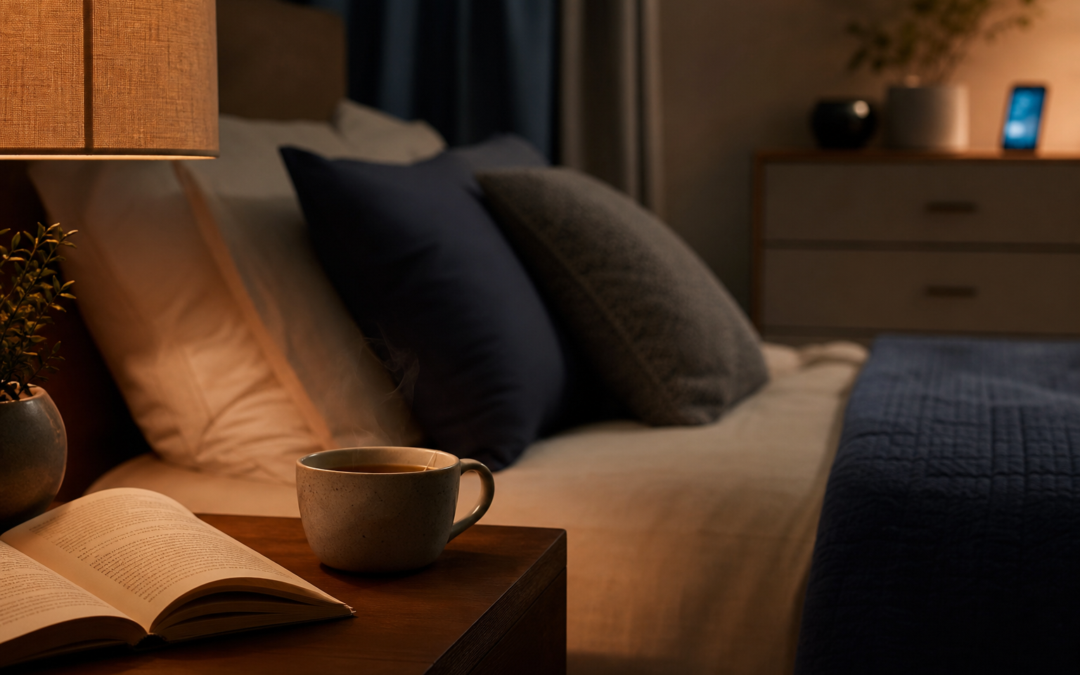
Herbal tea, warm water with lemon, or another non-caffeinated drink can provide the same hand-to-mug cue without alcohol. If you use supplements or sleep-related drink mixes, check ingredients carefully and talk with a clinician or pharmacist if you take medication, are pregnant, have a health condition, or are unsure whether an ingredient is appropriate for you.
Build a 20-minute wind-down cue
A short routine can work better than a long one you never follow. Try:
- Dim lights
- Put your phone on charge outside the bed
- Prep tomorrow’s essentials
- Do light stretching or quiet reading
- Keep the bedroom cool and dark
The goal is not a perfect spa evening. The goal is a repeatable cue your brain can learn.
Use food timing carefully
Going to bed overly full can be uncomfortable, but going to bed hungry can also wake some people up. If alcohol has been part of your evening because dinner was early, a small sleep-friendly snack may be a better fit than a drink.
Good options are simple and moderate: yogurt, a banana, whole-grain toast, oatmeal, or a small handful of nuts if they agree with you.
What to do if you wake up after drinking
If you wake up in the middle of the night after alcohol, avoid turning it into a full mental courtroom drama. Try a boring reset:
- Keep lights low.
- Sip water if you are thirsty.
- Avoid checking the clock repeatedly.
- If you are awake for a while, get out of bed briefly and do something quiet in dim light.
- Return to bed when sleepy again.
The next morning, look for the pattern instead of blaming one bad night. Did it happen after drinking later? After more than usual? With a heavy meal? During a stressful week? Sleep is annoying like that: usually a system, not one villain.
When to get medical advice
Consider talking with a clinician if:
- You regularly rely on alcohol to fall asleep
- You have persistent insomnia or frequent middle-of-the-night awakenings
- You snore loudly or someone notices breathing pauses
- You wake up gasping or choking
- You have severe daytime sleepiness
- You mix alcohol with sleep medication, anxiety medication, pain medication, or other sedating substances
- You are concerned about your alcohol use or find it difficult to cut back
Alcohol and sedating medications can be a safety issue. If you have questions about mixing alcohol with any medication or supplement, ask a clinician or pharmacist before experimenting.
A simple seven-night reset
If alcohol may be affecting your sleep, try this for one week:
Nights 1–2: observe the pattern
Do not overhaul everything yet. Note when you drink, how much, when you go to bed, and whether you wake up during the night.
Nights 3–5: move the ritual earlier
If you choose to drink, keep it earlier in the evening. Add a separate bedtime ritual that does not involve alcohol: shower, tea, stretching, reading, or lights-down time.
Nights 6–7: test alcohol-free sleep
Choose two alcohol-free nights and compare sleep continuity and morning energy. You are not trying to prove a moral point. You are testing whether your sleep improves when alcohol is removed from the bedtime window.
Related reading
- What to Eat Before Bed: Sleep-Friendly Snacks Without Overdoing It
- How to Create a Wind-Down Routine for Better Sleep
- Why Do I Wake Up at 3 AM Every Night?
- How To Know If Snoring Might Be More Than Annoying
- Caffeine Cutoff Time for Sleep: How Late Is Too Late?
Fast Sleep Fix disclosure and health note
Fast Sleep Fix publishes informational sleep content and may earn a commission if you choose to use certain product links in future articles. This article currently contains no affiliate links. Sleep needs vary, and this content is not a substitute for medical advice, diagnosis, or treatment. If you have persistent insomnia, loud snoring with breathing pauses, severe daytime sleepiness, pain, medication questions, or any safety concern, talk with a qualified healthcare professional.